
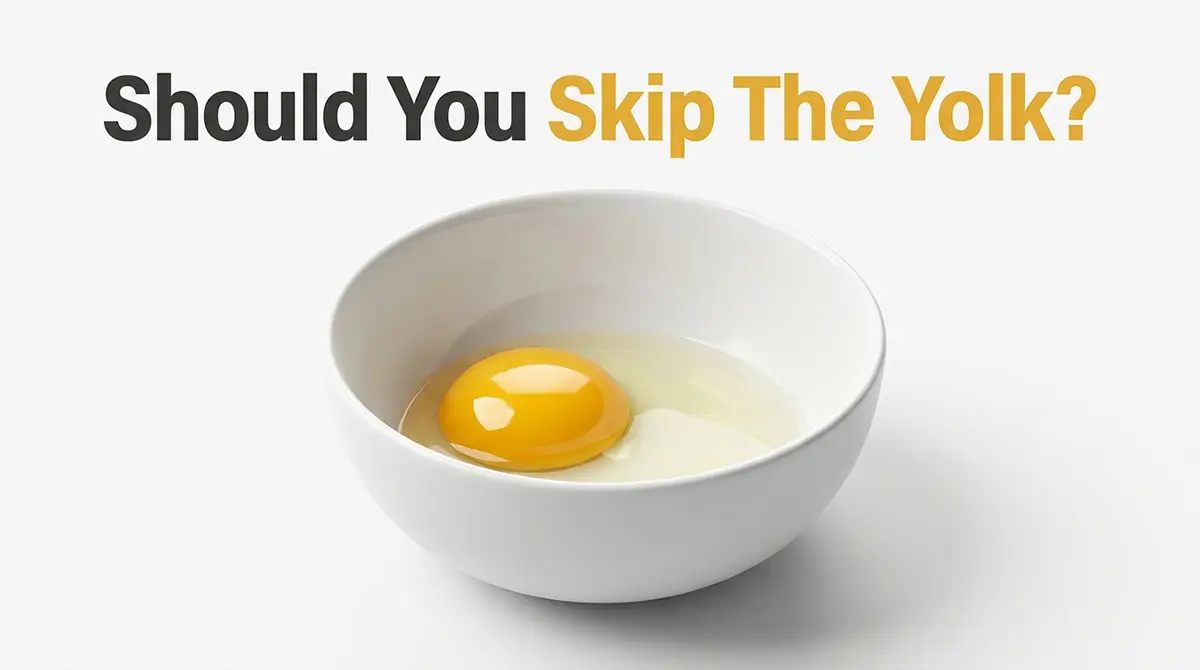
For decades, the egg yolk was public enemy number one in the nutrition world. In the 1970s and 1980s, health guidelines, fearing a rise in heart disease, warned us that eating cholesterol-rich foods would directly clog our arteries. This fear birthed the era of the “egg white omelet.”
Today, modern nutritional science has drastically shifted. We now know that the relationship between the food you eat and the cholesterol circulating in your veins is much more complex than previously thought. So, are egg yolks actually bad for your cholesterol, or have we been throwing away the healthiest part of the egg for no reason? Let’s break down the actual nutrition facts.

The Great Confusion: Dietary vs. Blood Cholesterol
To understand the science of eggs, you must first understand that there are two entirely different types of cholesterol being discussed in health circles.
What is Dietary Cholesterol?
Dietary cholesterol is the cholesterol found directly in the food you eat. It is only present in animal products, such as meat, dairy, and, of course, egg yolks. A single large egg contains about 186 milligrams of dietary cholesterol, all of which is located in the yolk.
What is Blood Cholesterol?
Blood cholesterol is the waxy, fat-like substance circulating in your bloodstream. Your body actually needs cholesterol to survive. It is used to build cell membranes, produce vitamin D, and create crucial hormones like testosterone and estrogen. Because it is so vital, your body doesn’t rely purely on the food you eat to get it; your liver produces a massive amount of cholesterol every single day.
The Liver’s Autoregulation System
Here is the most critical fact that older studies missed: the human body is incredibly smart. Your liver has a built-in regulatory system. When you eat foods high in dietary cholesterol (like egg yolks), your liver simply produces less cholesterol to balance it out. Conversely, if you eat no cholesterol, your liver ramps up production. For about 75% of the population, eating dietary cholesterol has very little impact on the total cholesterol levels in their blood.
HDL vs. LDL: Breaking Down the “Good” and “Bad”
When you get a standard blood panel at the doctor, they are looking at lipoproteins, which carry cholesterol through your blood.
LDL (Low-Density Lipoprotein)
Often called the “bad” cholesterol, high levels of small, dense LDL particles are linked to a buildup of plaque in the arteries. However, particle size matters, which we will discuss below.
HDL (High-Density Lipoprotein)
Often called the “good” cholesterol, HDL acts like a scavenger, carrying cholesterol away from the arteries and back to the liver to be broken down and passed from the body.
How Eggs Improve the Cholesterol Ratio
Extensive modern studies show that eating whole eggs actually improves your overall lipid profile. Consuming egg yolks consistently raises HDL (the good cholesterol). Furthermore, while eggs might slightly raise LDL in some people, they tend to change the size of the LDL particles from small and dense (which is dangerous) to large and buoyant (which is generally considered benign).
The Nutritional Powerhouse Inside the Yolk
When you order an egg white omelet, you are consuming pure protein, but you are throwing away almost all of the vitamins, minerals, and healthy fats. The yolk is nature’s multivitamin.
Choline for Brain Health
Egg yolks are one of the absolute best dietary sources of choline in the world. Choline is an essential nutrient used to build cell membranes and produce signaling molecules in the brain. It is highly linked to improved memory and cognitive function. A lack of choline can often be a factor if you are experiencing brain fog.
Lutein and Zeaxanthin for the Eyes
The beautiful yellow color of the yolk comes from lutein and zeaxanthin. These powerful antioxidants accumulate in the retina of your eye, significantly reducing the risk of macular degeneration and cataracts.
Fat-Soluble Vitamins (A, D, E, K)
Vitamins A, D, E, and K require dietary fat to be absorbed by your body. The egg yolk conveniently packages these vital vitamins including that hard-to-get Vitamin D” right alongside the healthy fats needed to absorb them effectively.
The Verdict: Stop Fearing the Yolk
It is time to welcome the yolk back to the breakfast table. Egg yolks are safe, highly nutritious, and packed with vital compounds your brain and body need to thrive.
For the average healthy adult, science shows that eating up to 3 whole eggs per day is perfectly safe and can contribute to weight loss by keeping you full and saturated. Stop fearing dietary cholesterol and start enjoying one of nature’s most perfect, nutrient-dense foods.
*(Final Note: individuals with pre-existing conditions like diabetes or severe cardiovascular disease should always consult their physician before making significant dietary changes.)